It is Friday afternoon, you are the only adult on duty for the next 60 hours, and the budget says $30. This plan fills both days with things your kids will call a good weekend, keeps the total under that number, and builds in recovery time for you, because you are the engine and engines need fuel.
The structure is simple: each day gets one anchor activity, one stretch of low-effort filler, and one block where the kids entertain themselves while you sit down. Copy it as written or swap pieces, the frame holds either way.
Heads up: this post contains affiliate links. If you buy through them, SoloMom may earn a small commission at no extra cost to you.
The rules that make it run
- One outing per day, max. Two outings with one adult means two rounds of shoes, snacks, and transitions. The second outing is where weekends go to die.
- Feed everyone before you leave. Food bought out is the budget killer. Eat at home, carry snacks, and the $30 stays intact.
- Name the plan out loud at breakfast. Kids who know what the day holds argue less. A plan on the fridge argues even less than you do.
- Schedule your own break like it is an appointment. Quiet hour is on the plan below in writing. Defend it.
Saturday: the big-adventure day
8:00 to 9:30. Slow start
Pancakes from pantry staples, about $2 of ingredients, and let the kids flip their own. Everyone stays in pajamas. You drink the whole coffee while it is hot because the day’s only rule so far is “nobody rushes.”
9:30 to 12:00. The anchor outing
Pick one: the best playground you never go to, a free-day museum, a creek or trail, or the library’s Saturday program. The trick is novelty over cost, a park across town reads as an adventure to kids even when it costs nothing but gas. Pack the snack bag and a picnic blanket, and stay past the first “I’m bored,” because the second wind is where the good memories happen.
12:00 to 1:00. Picnic lunch on site
Sandwiches, fruit, and a treat from home run about $8 for the crew. Eating there stretches the outing another hour with zero extra effort from you.
1:00 to 3:00. Quiet hour, your name is on it
Home again. Littles nap, bigger kids get books, puzzles, or our wind-down activities for their age band in their rooms. You are off duty on the couch. This block is what makes the one-adult weekend sustainable, so treat it as load-bearing.
3:00 to 5:30. Backyard or living room free play
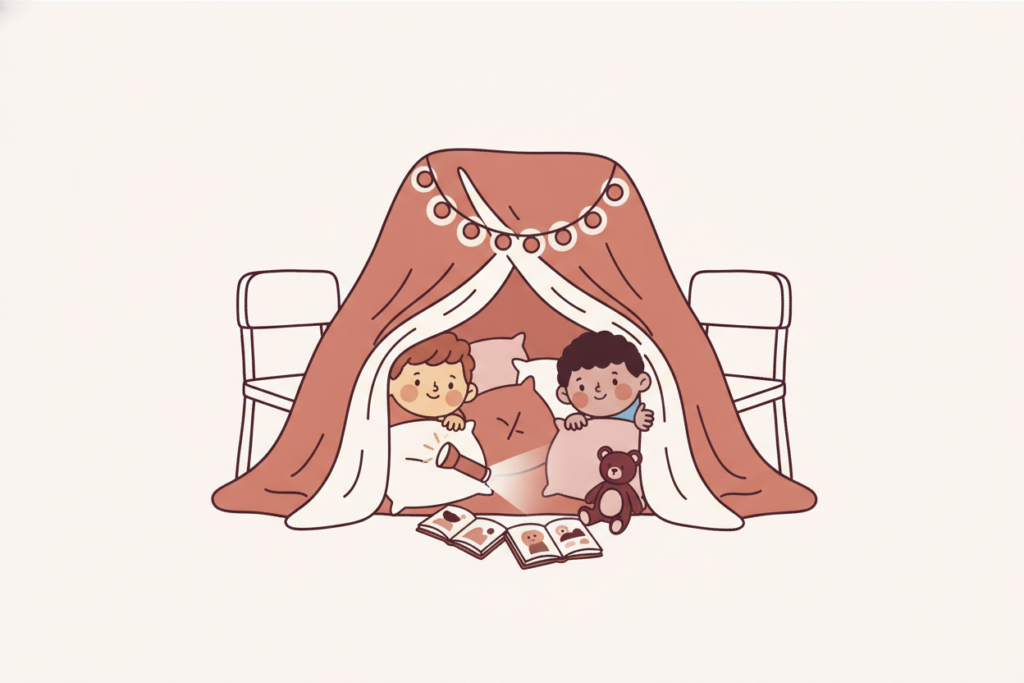
Kids run their own game while you are nearby but not performing. If they stall, hand them a mission: build a fort with a sign and a password, or set up tonight’s cinema.
5:30 to 8:00. Movie night, done properly
Dinner is make-your-own quesadillas or pasta, about $5. Then lights off for the movie you already own or stream, with popcorn popped from bulk kernels, about $1 a batch, and a couple of glow sticks each to make it an event. Tickets torn at the door if you have a kid who likes to run the box office.

Sunday: the close-to-home day
8:30 to 10:00. Breakfast picnic on the floor
Toast, eggs, and juice on Saturday’s blanket in the living room. Same food, different floor, somehow a completely different meal to children.
10:00 to 12:00. The home project block
One project you do together: bake a batch of anything, wash the car with maximum bubbles, plant the green-onion ends from the fridge, or build the cardboard-box creation of their choice. Budget about $5 in ingredients or supplies. Kids remember making things far longer than they remember buying things.
12:00 to 1:00. Lunch plus kid-led cleanup
Leftovers from Saturday. Cleanup races the playlist: two songs, whole living room, go.
1:00 to 3:00. Quiet hour, round two
Same rules as Saturday. Yes, both days. It works because it repeats.
3:00 to 5:00. The mini outing
Walk to whatever is closest: the nearest playground, a neighborhood loop with a scavenger list, or puddle-jumping if the weather cooperates. Close means home is five minutes away when someone melts down, which lowers the stakes for everyone.
5:00 to 7:30. Easy dinner and the week reset
Dinner is the $4 pantry meal you can make half-asleep. Afterward, kids pick next weekend’s anchor outing from three options you offer, then bags and clothes get staged for Monday. The weekend ends with everyone knowing what happens next, including you.
The budget, itemized
- Pancake breakfast: $2
- Picnic lunch: $8
- Anchor outing: $0 plus gas
- Quesadilla dinner and popcorn: $6
- Glow sticks: $3
- Sunday project supplies: $5
- Sunday meals from pantry and leftovers: $4
- Total: $28
A tight grocery week covers all of it. If the food math feels impossible right now, the Make the Math Work toolkit has plans for feeding a family on one income without the weekend disappearing from the budget.
The swap bench
Any block above trades out for one of these without breaking the budget or the structure. Keep the times, swap the contents.
- Anchor outing swaps: a farmers market lap with $3 to spend on one treat each, a fire station or pet store visit (call ahead, both usually say yes), the airport observation area or a train platform for vehicle-obsessed kids, or a “tourist morning” at the fanciest hotel lobby and fountain downtown.
- Project block swaps: a family car wash business with homemade signs, freezer-meal prep where kids run the assembly line, a photo shoot where each kid art-directs one scene, or repotting every sad houseplant you own.
- Movie night swaps: a living room campout with blankets and flashlight stories, a board game championship with a homemade trophy, or a family concert where everyone performs one act, applause mandatory.
- Winter version: move the picnic indoors, trade the playground for the library plus a hot chocolate stop at home, and let the project block go long. Cold weekends run better on one outing and two projects.
Write three swaps on the back of the fridge plan. When a block collapses, and one will, you pull a swap instead of a screen, and the day keeps moving.
FAQ
What if it rains all weekend?
Swap the anchor outing for the library, an indoor mall walk with a scavenger list, or a hot-chocolate-and-fort morning at home. Keep the time blocks identical, because the schedule is doing more work than the destinations are.
How do I handle wildly different ages alone?
Anchor to the youngest kid’s stamina and give the oldest a leadership job: navigator, photographer, or snack chief. A big kid with a title complains about half as much as a big kid who feels dragged along.
Does quiet hour really work with kids who fight it?
It takes about three weekends of holding the line. Boxes of special quiet-hour-only items help, and so does the phrase “you do not have to sleep, you have to be quiet in your space.” Hold firm, the payoff is your sanity.
What if I have a baby plus older kids?
Run the anchor outing during the baby’s best morning stretch and wear the baby so your hands stay free. Quiet hour aligns everyone: baby naps, big kids do room time, you exhale.
Your next step
Write this weekend’s version on the fridge tonight: one anchor, one project, two quiet hours, $30 cap. Then build your activity bench from the Solo Weekends That Don’t Wreck You toolkit, starting with our 75 screen-free activities sorted by age and energy level. The Success Squad sends one weekend plan and one practical tool to your inbox every week. The signup lives on the toolkit page. Built for Solo Moms. By ones who get it.