
School let out an hour ago, dinner is ninety minutes away, and your kid is sprawled on the couch asking what there is to do while you try to finish one more thing. You want that gap to count for something, but the last thing either of you needs is a second shift of worksheets.
You are far from alone in thinking this way. Pinterest’s 2026 Parenting Trend Report shows searches for “educational activities for kids” up 280% year over year, with “life skills activities for kids” up 100%. Parents everywhere want the same thing: learning that hides inside regular life. Below are 30 ideas that do exactly that, sorted by age and by what each one secretly teaches. Every one costs nothing or close to it, and none of them look like homework.
How to use this list
Pick one idea, not five. The after-school window is short, kids come home fried, and you have your own list waiting. One ten-minute activity that lands beats an ambitious hour that ends in groans. Most of these run themselves once you set them up, which matters when you are the only adult in the house. If you want the pure-fun side of the same window, our guide to screen-free activities by age has you covered there too.
| Age band | Sweet spot | What lands best |
|---|---|---|
| 5 to 7 | 10 to 15 minutes | Games with counting, sorting, and being the official helper |
| 8 to 10 | 15 to 25 minutes | Real jobs with a twist: measuring, mapping, keeping score |
| 11 to 13 | 20 to 40 minutes | Ownership: planning, fixing, running something start to finish |
Ages 5 to 7: learning that looks like playing
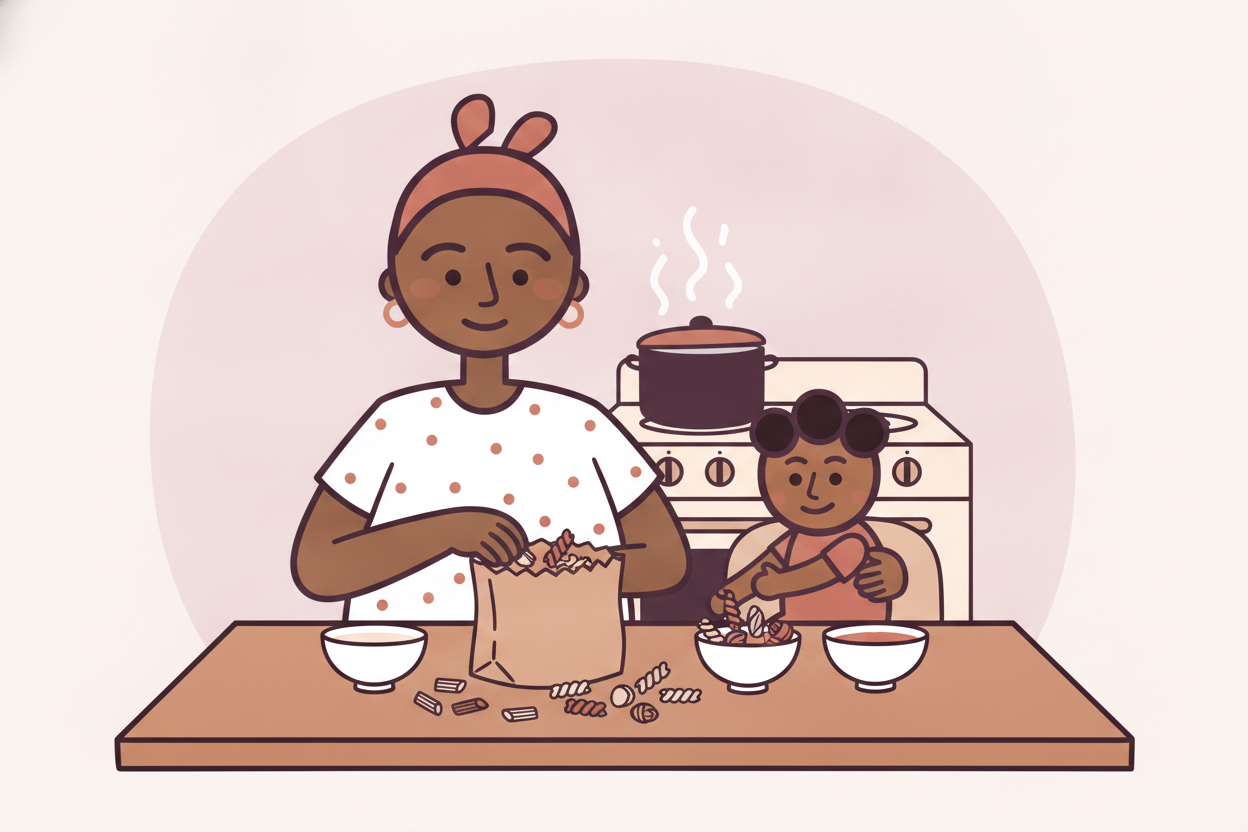
- Kitchen measuring crew. Hand over the measuring cups while you cook and call out amounts. Halves and quarters sink in years before a fractions worksheet shows up. Secretly teaches: math.
- Label the house. Write ten sticky notes (“door,” “lamp,” “sink”) and have your kid read each one and stick it on the right thing. Secretly teaches: reading.
- Sock match race. Dump the clean laundry basket and time how fast they can pair every sock. Sorting practice, and the laundry gets done. Secretly teaches: math, life skills.
- Cereal box word hunt. At snack time, ask them to find five words on the box they can read out loud to you. Secretly teaches: reading.
- Count-the-block walk. On the walk home, count mailboxes, dogs, or red cars, then compare today’s total to yesterday’s. Secretly teaches: math.
- Recipe announcer. They hold the recipe and read each step out loud while you cook it. You get a sous-chef and they get fluency practice. Secretly teaches: reading, life skills.
- Table math. Setting the table becomes a puzzle: how many forks for four people, what changes if a friend comes, what goes away if someone has soup. Secretly teaches: math, life skills.
- Tomorrow board. Each night, write tomorrow’s plan in big letters (“school, park, tacos”) and have them read it back to you at breakfast. Secretly teaches: reading.
Ages 8 to 10: real jobs with a twist
- Recipe doubler. Pick a recipe and announce you are making a double batch. They recalculate every amount before anything hits the bowl. Secretly teaches: math.
- Grocery list scribe. They write the week’s list as you dictate it, then own the checking-off job at the store. Secretly teaches: writing, life skills.
- Estimation jar. Fill a jar with dry pasta or cereal, everyone guesses the count, then they count it out in groups of ten to crown a winner. Secretly teaches: math.
- Six-panel comic. Fold a sheet of paper into six boxes and have them retell the best or weirdest moment of their day as a comic strip. Secretly teaches: writing.
- Map maker. They draw the route from home to school from memory, with three labeled landmarks, then you check it together on the next walk. Secretly teaches: writing, spatial thinking.
- Repair apprentice. Loose screw, dead batteries, squeaky hinge: they do the fix while you narrate the steps once. Next time, they narrate. Secretly teaches: life skills.
- Weather scientist. Check the temperature at the same time every day for a week and graph it on paper. On Friday they present the findings at dinner. Secretly teaches: math.
- Laundry lab. They sort by color, load the machine, and predict how long the cycle will take, then check the guess against the clock. Secretly teaches: life skills, math.
If you want this whole approach in grab-and-go form, the free SoloMom Toolbox includes a deck of 75 screen-free activity cards you can print, cut apart, and let your kid draw from like a game. Pair the deck with the Activity Picker on our Fun with Kids page, which matches an idea to your kid’s age and the minutes you have. The fastest way to get the printables is the email signup at the bottom of this page.
Ages 11 to 13: hand over the keys
- Dinner takeover. One night a week, they plan and cook a full meal using only what is already in the kitchen. You assist; they run it. Secretly teaches: life skills, planning.
- Unit price detective. At the store, they compare two sizes of the same item and work out which one costs less per unit, then report the winner. Secretly teaches: math.
- Family reporter. They write five interview questions, call a grandparent or aunt, and record the answers on your phone for the family archive. Secretly teaches: writing, listening.
- Saturday architect. Hand them the job of planning this weekend’s free outing, times and all. Our solo parent weekend plan makes a good template to give them. Secretly teaches: planning, math.
- Teach-back. They pick one thing from school this week and teach it to you in five minutes, with one example they invent themselves. Explaining a thing cements it. Secretly teaches: mastery of whatever they choose.
- Manual mission. Something in the house is glitchy. They find the manual, read the troubleshooting section, and try the first fix before anyone searches online. Secretly teaches: reading, life skills.
- Pantry auditor. Before the grocery run, they count and log what you already have so nothing gets bought twice. Secretly teaches: math, life skills.
- The pitch. They want a later bedtime or a new privilege? Five written sentences of evidence, delivered at dinner. You judge on persuasiveness, not volume. Secretly teaches: writing, persuasion.
Money sense: the section that pays off for decades
Money skills are the quietest gap in most school days, and kids learn them the same way you use them: in small, real decisions. You already run these numbers every week to keep a one-income budget on track. These six ideas hand your kid a kid-sized version of the same muscle.
- Three-jar split (any age). Any money that comes in, from birthdays or chores, gets divided into three labeled jars: spend, save, share. The habit is the lesson.
- Higher or lower (ages 5 to 7). In the store, hold up two items and have them guess which one costs more, then check the tags together.
- Savings thermometer (ages 8 to 10). They pick a goal, draw a thermometer chart for it, and color in a segment every time coins go into the jar.
- Grocery deputy (ages 8 and up). Give them a short section of the list and a small cash amount, and let them make it stretch, tradeoffs and all.
- One-week ledger (ages 11 to 13). They track every cent that comes in or goes out for one week on paper, then tell you the one thing that surprised them.
- Bill detective (ages 11 to 13). Show them one household bill, have them find the usage number, and compare it to last month’s together.
FAQ: after-school learning at home
How long should an after-school activity take?
Ten to twenty minutes for most kids. The table above gives a sweet spot by age, but the real rule is to stop while it is still fun. A short win today makes tomorrow’s yes easier.
What if my kid refuses anything that sounds like school?
Never announce the lesson. “Want to time yourself sorting socks?” gets a yes where “let’s practice sorting” gets a groan. Every idea on this list works because the learning stays in disguise.
Do I need to buy anything for these activities?
No. Every idea runs on things already in your house: paper, tape, a change jar, the recycling bin, and whatever dinner you were making anyway.
How do I fit this in when we get home at six?
Attach it to something you are already doing. Half this list happens during cooking, shopping, laundry, or the walk home, so it costs you zero extra minutes.
Your next step
Pick one idea from your kid’s age band and run it tonight, attached to whatever you are already doing at 5 p.m. When it lands, add a second one on the weekend using the Activity Picker or our list of screen-free activities by age, and let the solo parent weekend plan handle Saturday. For more like this every week, The SOS is our free email: one money tip, one story, and one good idea for the weekend, every week. Signing up in the box just below this article also unlocks the free Toolbox printables, including those 75 activity cards. Resources, not reassurance.